Implant Supported Dentures in Cremorne
If your denture lifts when you eat, or you’ve stopped ordering certain foods, implants can help without going all the way to fixed teeth. An implant supported denture – also called an overdenture or snap-in denture – clips onto two to four dental implants. It stays steady while you eat and talk, and still comes out for cleaning.
- Registered specialist prosthodontist
- 3D-guided planning (CBCT)
- Implants & denture in one location

Implants placed where your denture needs them.
Which Situation Sounds like Yours?
Implant dentures sit between a regular denture and fixed teeth.
What Are Implant Supported Dentures?
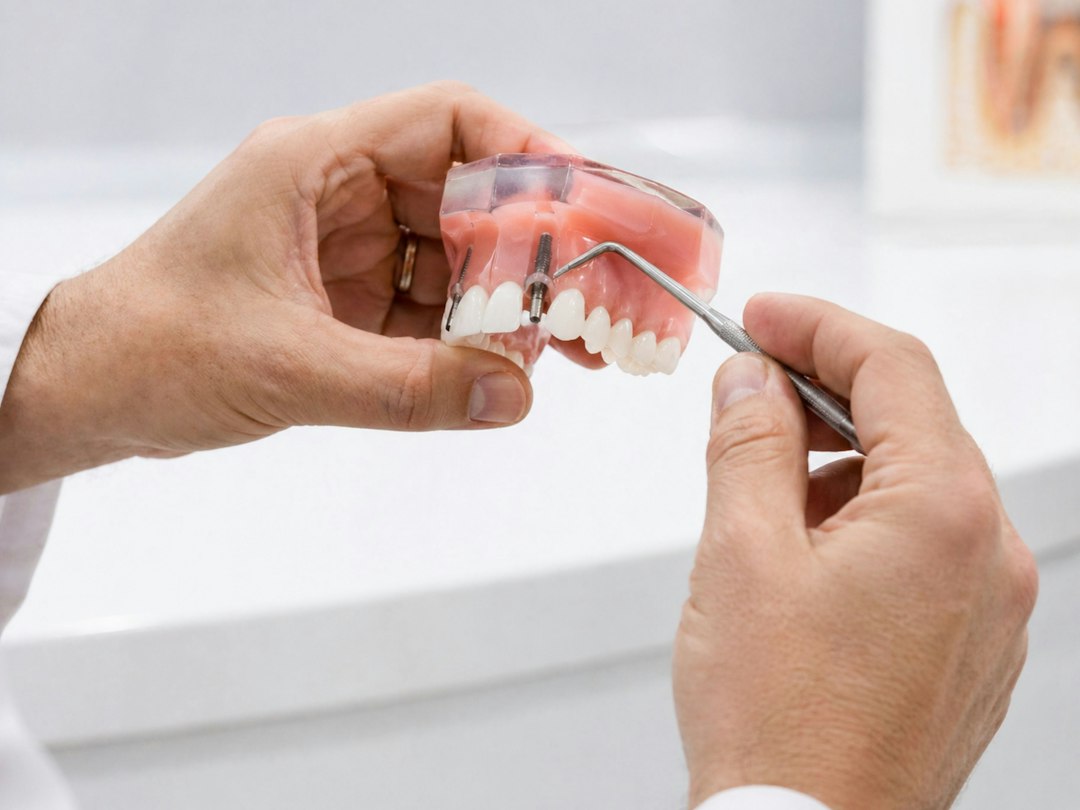
An implant supported denture is a removable denture that clips onto dental implants placed in the jaw. Small attachments on the implants click into matching parts inside the denture, holding it firmly in place. You take it out each day to clean it and your gums.
The lower jaw is where they help most. In 2002 an international expert panel, the McGill Consensus, stated that a lower denture held by two implants should be the first-choice standard of care for people with no lower teeth (McGill Consensus Statement). Upper overdentures usually need more implants, often four.

Specialist Planning for Implants and Denture
An overdenture only works well if the implants are placed where the denture needs them. Dr Ricky Lim is a registered specialist prosthodontist who both places implants and designs dentures, so implant positions are planned around the final denture – not the other way round.
- Bachelor of Dental Surgery, James Cook University
- Specialist training in Prosthodontics, University of Sydney
- Focus on aesthetic, implant and reconstructive dentistry
- Consultation, 3D planning, surgery and denture in one location
Implant systems we use: Nobel Biocare and Straumann
Individual Clips or a Bar
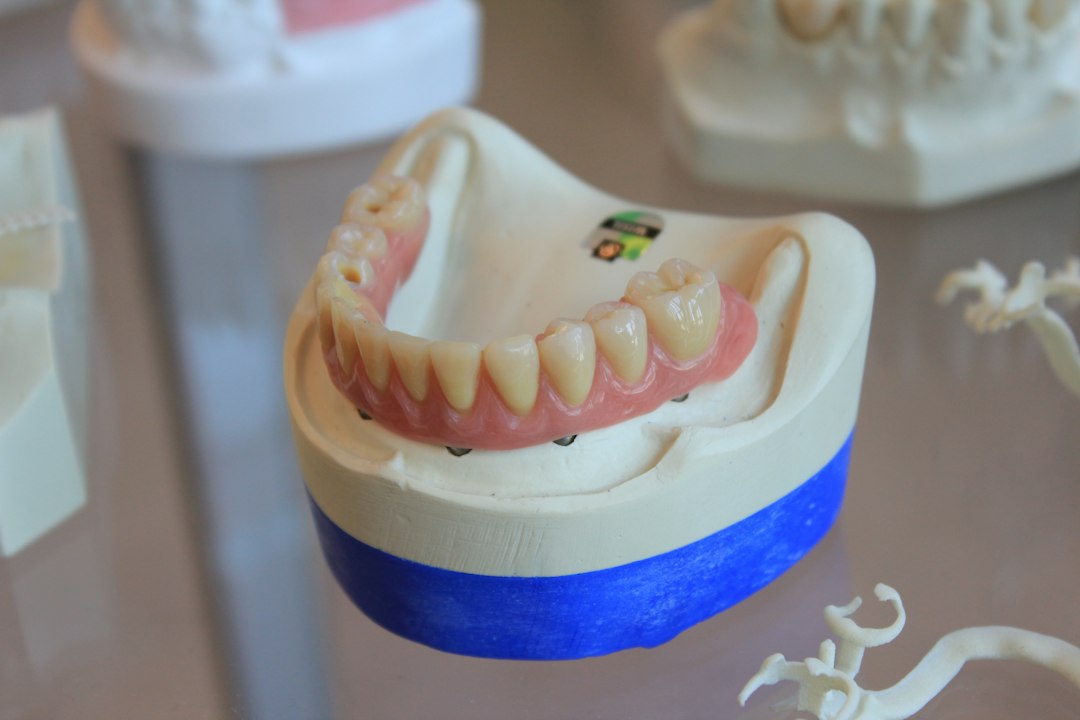
There are two main ways an overdenture connects to implants:
- Individual attachments – each implant has its own clip. Simple to clean and easy to service.
- Bar attachments – a thin custom bar joins the implants and the denture clips onto it. Often used when implants are angled or more support is needed.
The nylon inserts that grip the attachments wear with use and are replaced from time to time in a quick appointment. Dr Lim recommends the design that suits your bone, bite and dexterity.
How Treatment Works
A clear, staged path from consultation to a steadier denture.
We check your gums, bone and current denture with Cone Beam CT.
Number of implants, attachment type, timeline and fees.
Under local anaesthetic; your denture can often be adjusted to wear while healing.
Once implants bond, attachments are fitted and the denture clips on.
Implant Supported Denture Cost
The fee depends on the number of implants, the attachment type, whether a new denture is needed and any grafting. Your fee is set out in an itemised written quote after your consultation and scan. We use Nobel Biocare and Straumann implant systems.
Your first step is a one-hour consultation ($300, including digital scans, photos and any intraoral X-rays). If you need a 3D CBCT scan, it costs $220–$270 before your health fund rebate. You’ll then receive an itemised, written quote.
Many extras policies contribute, and we claim on-site.
Payment plans are available through humm®, with no interest on terms of up to 24 months.¹ An establishment fee and a monthly loan fee, charged by humm, apply. Approval is subject to humm’s credit assessment. Private health rebates are processed on-site.
¹ humm provided by Once Credit Pty Limited ABN 99 112 319 632, Australian Credit Licence No. 386194, subject to its Terms & Conditions. Fees, charges and interest (if applicable) vary depending on the product type, merchant and the amount of credit. Approval subject to credit assessment criteria.

The main factors we'll walk through at your consultation:
Fees are quoted individually after a clinical assessment and 3D scan. Any figures discussed beforehand are general guidance only and are confirmed in your written treatment plan.
Implant Dentures vs Regular Dentures vs All-on-4®
How the three main full-arch options compare.
| Conventional Denture | Implant Supported Denture | All-on-4® Bridge | |
|---|---|---|---|
|
Fixed or removable |
Removable |
Removable – clips onto implants |
✓ Fixed |
|
Implants needed |
None |
Commonly 2–4 |
Four, sometimes more |
|
Stability when eating |
Can lift and move |
✓ Steady |
✓ Like fixed teeth |
|
Cleaning |
Take out daily |
Take out daily; clean implants too |
Clean in place + reviews |
|
Upkeep |
Relines, adhesive |
Clip/insert replacement |
Reviews, occasional repairs |
An overdenture usually needs fewer implants than a fixed bridge. The right option is discussed at consultation.
Common Mistakes With Implant Dentures
- Assuming it’s All-on-4® or nothing. Two implants can transform a lower denture.
- Skipping daily cleaning. Plaque around implants can inflame the gums and threaten the implants.
- Ignoring worn clips. If the denture starts to loosen, the inserts usually just need replacing.
- Sleeping in the denture. Give your gums a rest overnight unless advised otherwise.
- Delaying too long. Bone keeps shrinking under a denture, which can mean grafting later.
Visiting us in Cremorne
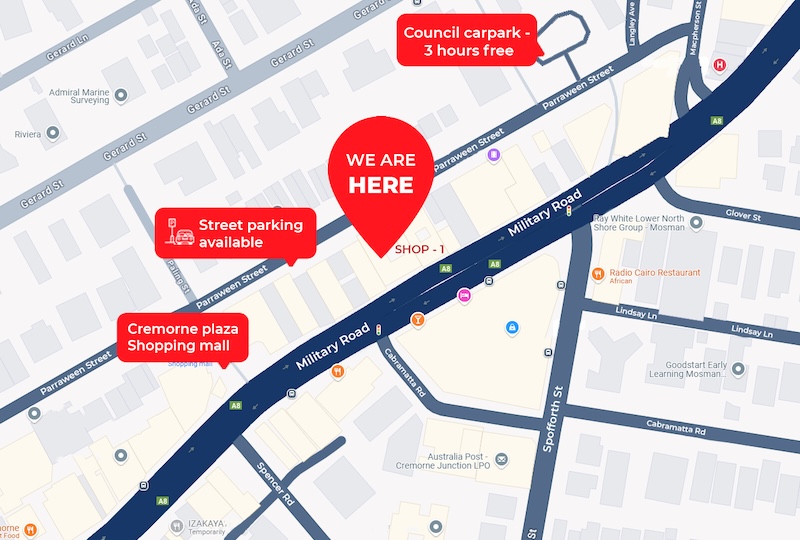
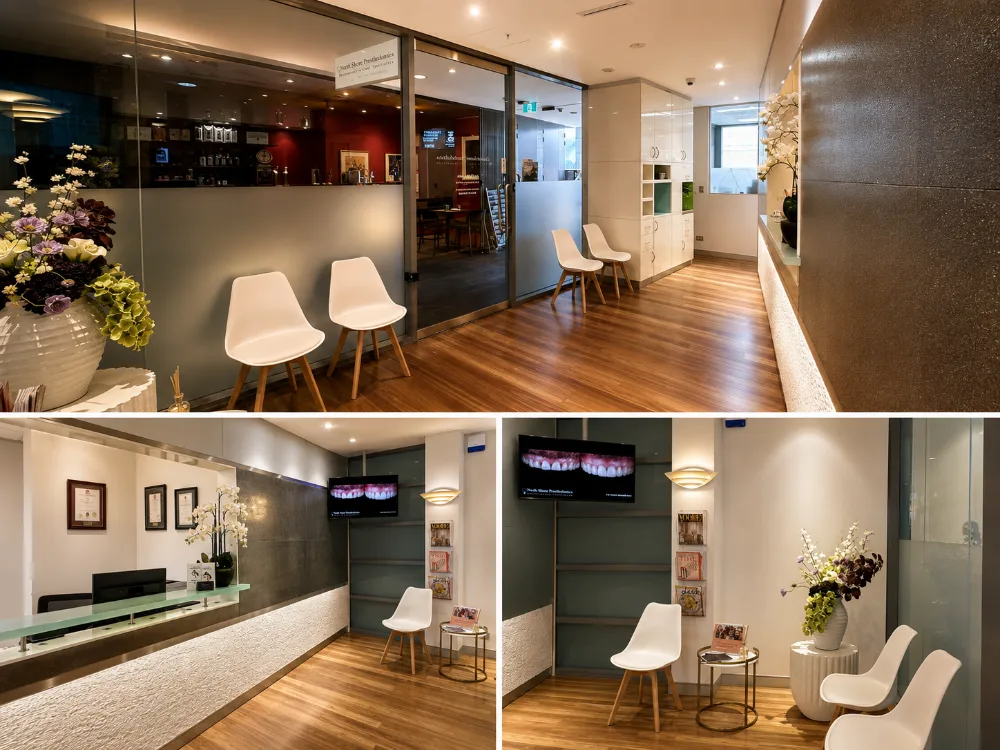
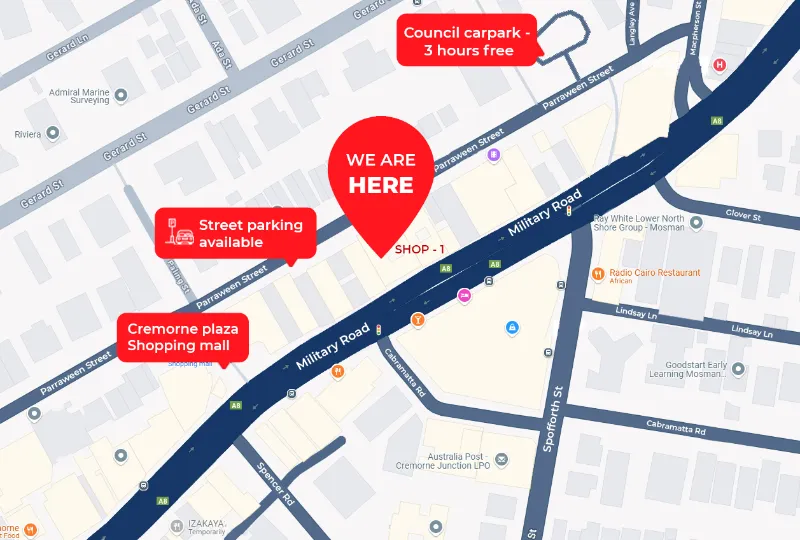
Our practice is on Parraween Street in Cremorne, accessible from both Military Road and Parraween Street, with street parking and a council car park (up to 3 hours) close by. We welcome patients from across the Lower North Shore and referrals from dentists throughout Sydney.
Opening hours: Monday, Tuesday, Thursday and Friday, 8am–5pm. Closed Wednesday and weekends.
- Cremorne
- Mosman
- Neutral Bay
- Cammeray
- North Sydney
- Kirribilli
- Cremorne Point
- Crows Nest
Implant Denture FAQs
Straight answers to what patients ask most. If yours isn't here, our team is happy to help.
Yes. That’s the key difference from All-on-4®, which is fixed. You unclip the denture to clean it and the implants each day.
Commonly two for a lower denture and four for an upper, depending on your bone. Your 3D scan guides the number.
Sometimes it can be fitted with attachments. Often a new denture gives a better fit and result.
They feel much steadier than a regular denture. A fixed All-on-4® bridge is closer to natural teeth.
The implants can last for decades with good care. The denture and its clips wear and are serviced or replaced over time.
Age alone isn’t usually a barrier. General health, bone and medications matter more and are checked at consultation.
Usually, because fewer implants are used and the denture is removable. Your quote can show both options.
Ready for a denture that stays put?
Book a consultation with Dr Ricky Lim to see whether implants can hold your denture in place.
Any surgical or invasive procedure carries risks. The information on this page is general in nature and is not a substitute for individual clinical advice. Before proceeding with treatment, you should seek a second opinion from an appropriately qualified health practitioner. Individual results vary.